
Robotic Radical Prostatectomy
Show video transcript
It’s very interesting how I was always drawn to this technology.
In 1992, when the robot had been out for two years, I visited the American Urological Conference, and I tended the booth for Intuitive every day.
I’d actually convinced them to bring the robot to Sydney, and convinced Mani Menon, who was the father of robotic surgery, to come over and train us.
Unfortunately, that didn’t work out.
So, during the next few years I was always really interested in robotic surgery.
I kept in touch with the company, and fortunately we were very, very lucky in that the cardiothoracic surgeons were able to obtain the robot with the use of their donors.
John Davis is a principal donor, and was behind all this and I was very lucky and privileged to be in a position where I could start the robotic program.
I was chosen to lead it, pioneer it.
There was a lot of work and effort going into it at the start; we spent a long time at home watching videos, role playing it with the assistants and the nurses, and went through a lot of dummy cases before we did the first case.
I think I was very, very lucky in that I’d done a lot of laparoscopic work first, and this was a prostatectomy, so it was the same steps but a much more sophisticated bit of equipment.
I did the first case1.
I did 70% of the cases in the first year2.
I was also privileged to train other surgeons and assistants with this procedure.
I’m really happy to see that a lot of the urologists now have switched over to robot assisted surgeries, and it’s clear that this is the way of the future.
We have now performed over 3000 cases, I’m very pleased to say that I performed a large amount of these personally.
Studies have shown that you have to do over 200 cases to get excellent outcomes3, and fortunately I’m above that figure but I do believe that we had a low learning curve because of my experience in laparoscopic surgery.
The reason in Australia that there aren’t more robots around, I believe, is because of the cost of the robotic system.
You really need to have someone who helps the hospital donation to get the robot, and also there’s a significant learning curve initially when you start.
So, I’ve been very, very fortunate to be in a privileged position, and I’m really lucky and I really have to thank the cardiothoracic department, and the donors who bought the robot.
At a glance
- What it is: A minimally invasive operation that removes the entire prostate (and seminal vesicles) for prostate cancer, performed through five or six small incisions using the da Vinci robotic system. The surgeon controls fully wristed instruments from a console; the robot does not act on its own.4,5
- Who it suits: Men with localised or selected locally advanced prostate cancer who have chosen surgery as their treatment, are fit for general anaesthesia, and have a reasonable life expectancy in line with international guidelines.4,5
- What the evidence shows: Compared with open radical prostatectomy, robot-assisted radical prostatectomy is associated with less blood loss, lower transfusion rates, shorter hospital stay, and earlier return to usual activity, with similar oncological outcomes and similar 24-month urinary and sexual function in the published randomised data.6,7,8
- Where Urology NSW sits: Dr Raji Kooner performed the first robot-assisted radical prostatectomy in NSW1 and has since performed over 3,000 robotic urological procedures, with a substantial proportion of robotic prostatectomies done personally. He has trained other surgeons in the technique, offers robotic prostatectomy on both the multiport (da Vinci Xi) and single-port (da Vinci SP) platforms, and uses intra-operative frozen-section analysis (NeuroSAFE) in selected nerve-sparing cases to guide nerve preservation.14,15
What is robotic radical prostatectomy?
Radical prostatectomy is the surgical removal of the entire prostate gland and the seminal vesicles. It is one of the standard, evidence-based treatments for clinically localised prostate cancer, alongside active surveillance and radiotherapy.4,5
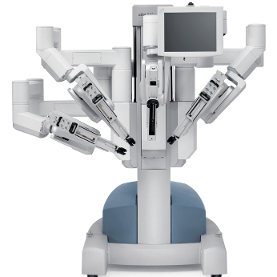
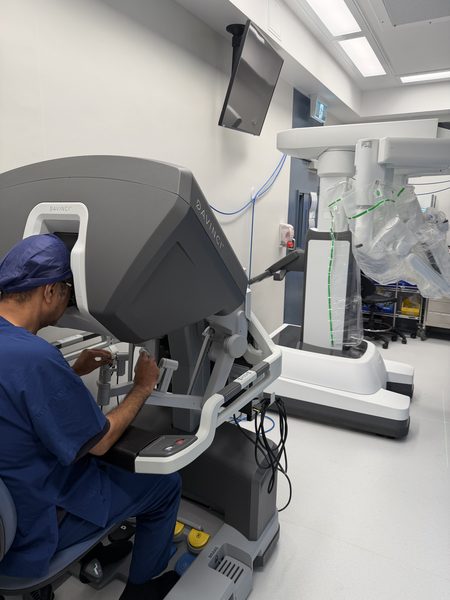
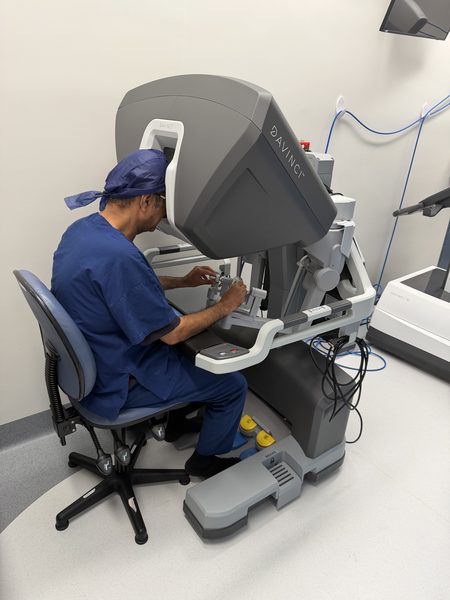
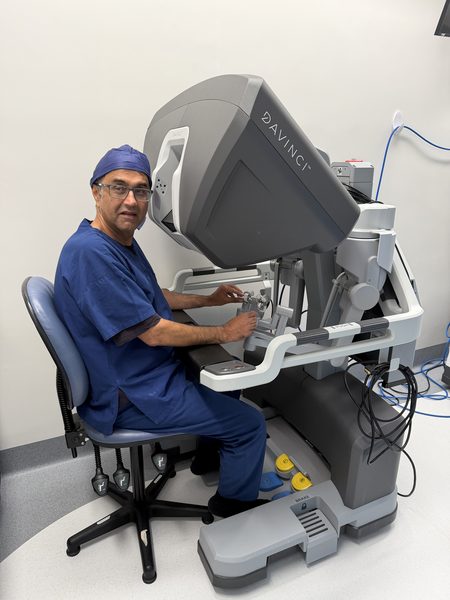
Robotic radical prostatectomy uses the da Vinci surgical system to perform that operation through small keyhole incisions. The surgeon sits at a console next to the operating table, and controls a fully articulating 3D HD camera and three to four wristed instruments through ports placed in the abdomen. The robot does not move on its own; every instrument movement is a direct, scaled, tremor-filtered translation of the surgeon’s hand movements.4
The operative principles are the same as for open or laparoscopic radical prostatectomy: the same anatomical planes, the same cancer-clearance and nerve-sparing steps, and the same reconstruction of the urinary tract by suturing the bladder back to the urethra. What changes is the access route into the pelvis and the magnification, dexterity and precision of the dissection.
The Sydney robotic prostatectomy program
Dr Kooner’s interest in robotic urology began in 1992, when he visited the Intuitive Surgical booth at the American Urological Association annual meeting and tried to bring the platform to Sydney for the first time. The first attempt did not proceed, but the interest remained. A few years later, with the support of donors led by John Davis and the cardiothoracic department, the hospital was able to install a da Vinci system. Dr Kooner was chosen to lead the urology robotic program.1
The first robot-assisted radical prostatectomy in NSW was performed by Dr Kooner.1 A great deal of preparation went into the early cases, including video review, role-playing with the surgical assistants and theatre nurses, and dry runs before any patient procedure. Dr Kooner’s prior experience with laparoscopic urological surgery helped shorten the early learning curve.2,3,9
Over 3,000 robotic urological procedures have now been performed at the program, with Dr Kooner personally performing a substantial proportion of these. Dr Kooner has trained other surgeons and assistants in the technique. Published evidence supports the principle that surgeon case volume is an important driver of cancer-control and functional outcomes after radical prostatectomy.3,9
Who is suitable?
Robotic radical prostatectomy is most often chosen for:
- Men with intermediate- or high-risk localised prostate cancer (typically ISUP grade group 2 or above on biopsy) who have chosen surgery as their treatment.4,5
- Selected men with low-risk disease who have decided against active surveillance, after a careful discussion of the trade-offs.4,5
- Selected men with locally advanced disease (cT3a, sometimes cT3b) as part of a multimodal plan, where surgery is one component of treatment.4
- Men who are medically fit for a general anaesthetic of approximately two to three hours and for the steep head-down (Trendelenburg) position required.
Surgery is not always the right answer. Robotic radical prostatectomy is usually not the first choice for:
- Low-risk disease where active surveillance is a safer option.4,5
- Men with significant cardiac, respiratory or anaesthetic risk that would make a long general anaesthetic unsafe.
- Widely metastatic disease, where the focus shifts to systemic and local non-surgical treatment.
- Men with a life expectancy below the threshold at which the international guidelines recommend definitive local treatment.4,5
Each recommendation is made with the individual patient after a full history, examination, and review of imaging (multiparametric MRI), biopsy pathology, PSA trend and a risk nomogram such as the Briganti or MSKCC nomogram for the chance of nodal involvement.10
How is robotic radical prostatectomy performed?
- Anaesthesia and position. The operation is performed under general anaesthesia. The patient is positioned supine with a steep head-down (Trendelenburg) tilt, which lets gravity move the bowel up and away from the pelvis.
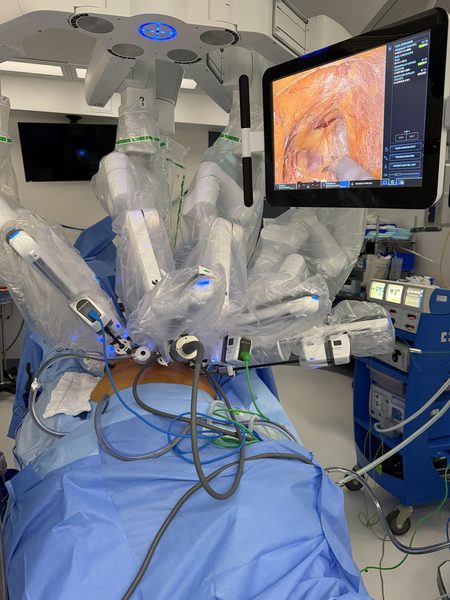
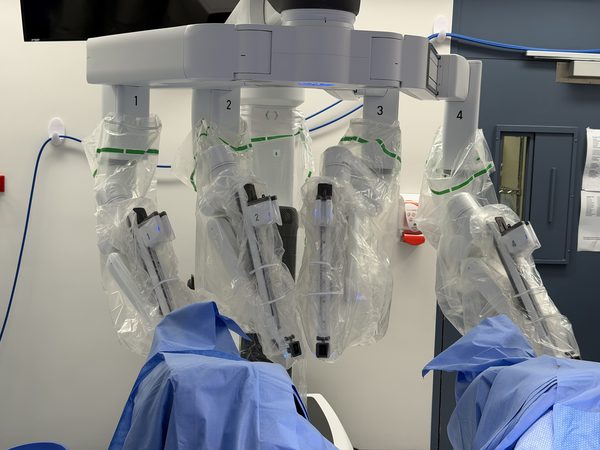
- Port placement and docking. Five or six small (8-12 mm) ports are placed across the lower abdomen. The abdomen is gently inflated with carbon dioxide. The da Vinci robot is docked over the patient and the camera and three wristed instruments are advanced through the ports.4
- Access to the prostate. The bladder is taken down off the front of the abdominal wall to expose the space of Retzius, in front of the prostate. (In selected cases a Retzius-sparing approach is used, which preserves the anterior supports of the bladder for earlier return of continence.)11
- Bladder neck and seminal vesicles. The bladder neck is carefully separated from the prostate, preserving as much bladder neck muscle as is oncologically safe. The seminal vesicles and the vas deferens on each side are dissected free.
- Posterior plane. The plane between the back of the prostate and the front of the rectum is developed through Denonvilliers’ fascia.
- Nerve sparing. Where it is oncologically safe, the neurovascular bundles that run down the posterolateral surface of the prostate are peeled off the gland using an interfascial or intrafascial plane. Nerve sparing can be unilateral or bilateral, and the plan can be adjusted on one side intra-operatively if intraoperative findings raise concern about extraprostatic extension.4,11,12 In selected cases, the nerve-sparing decision is supported by intra-operative frozen-section analysis (the NeuroSAFE technique), described in the next section.14,15
- Apex and urethral division. The prostatic apex is defined and the urethra is divided just beyond it, preserving urethral length and the external urinary sphincter, which is the main muscle responsible for continence.
- Pelvic lymph node dissection. An extended pelvic lymph node dissection is performed for intermediate- and high-risk disease where the nomogram-estimated risk of nodal involvement is above the guideline threshold (typically ~5-7%).4,10
- Vesico-urethral anastomosis. The bladder is sutured back to the urethra over a urinary catheter using fine sutures. A posterior reconstruction stitch (Rocco-style) is often added to support the new join.2
- Specimen retrieval and closure. The prostate and seminal vesicles are removed inside a specimen bag through one of the port sites, which is extended slightly. The port sites are closed in layers. A small pelvic drain is sometimes placed and removed before discharge.
Operating time is typically two to three hours in experienced hands, depending on the patient’s anatomy, prostate size, prior surgery and whether a lymph node dissection is performed.
Intra-operative frozen-section analysis for nerve sparing (NeuroSAFE)
One of the trade-offs in radical prostatectomy is between two competing goals. On one side, the surgeon wants to preserve the neurovascular bundles that run down the posterolateral surface of the prostate, because preserving them gives the best chance of recovering erectile function and helps with early continence. On the other side, the surgeon must not leave any cancer behind in the preserved nerve tissue.
The NeuroSAFE technique (Neurovascular structure-adjacent frozen-section examination) is designed to reduce that trade-off. While the patient is still on the table, the freshly removed prostate is sent to the pathologist, who freezes and sections the entire posterolateral neurovascular margin and reports the result back to the operating room within roughly 30 to 45 minutes. The surgeon then waits for the result before completing the operation:14,15
- If the frozen-section margin is clear, the nerve-sparing dissection is left as it is and the operation proceeds to the bladder-urethra anastomosis.
- If the frozen-section margin is positive, the surgeon performs a secondary "wide" excision of the affected neurovascular bundle on that side. This converts a positive surgical margin into a negative margin in the great majority of cases, at the cost of removing the nerve bundle on that side.14
The technique was developed at the Martini-Klinik in Hamburg and first reported in a series of 11,069 consecutive radical prostatectomies by Schlomm and colleagues in European Urology in 2012, where it was shown to increase the rate of nerve-sparing surgery and reduce positive surgical margins without compromising cancer control.14 A 2024 systematic review and meta-analysis of 4,207 patients (Ditonno et al., Prostate Cancer and Prostatic Diseases) reached the same conclusion: NeuroSAFE-guided robotic prostatectomy increased the likelihood of a nerve-sparing operation, reduced the positive surgical margin rate at final pathology, and reduced biochemical recurrence, with significantly higher rates of being pad-free and of erectile-function recovery at 12 months.16
The strongest single piece of evidence is the UK NeuroSAFE PROOF randomised controlled trial, published in Lancet Oncology in 2025 (Dinneen et al.). 381 men with localised prostate cancer were randomised to standard robotic prostatectomy or NeuroSAFE-guided robotic prostatectomy. At 12 months, men in the NeuroSAFE arm had significantly better erectile function (mean IIEF-5 score 12.7 vs 9.7), earlier return of urinary continence at 3 months, and no measurable disadvantage in cancer control (positive surgical margins, biochemical recurrence and salvage treatment rates were similar between arms).15
At Urology NSW, intra-operative frozen-section analysis using the NeuroSAFE approach is offered in selected nerve-sparing cases where the result is likely to change the operation: typically men with intermediate- or high-risk localised disease and good baseline erectile function, where preserving the neurovascular bundle would be desired but pre-operative imaging or biopsy raises a concern about extraprostatic extension on that side. The technique adds approximately 30 to 45 minutes to the operating time and depends on a dedicated urological pathology service being available in real time.14,16
Limitations should also be understood:
- NeuroSAFE samples a thin slice of the neurovascular margin, so very small (sub-millimetre) cancer cells right at the edge of the slice can be missed; false-negative results are uncommon but recognised in the published literature.14,16
- It does not change the underlying pathology of the cancer; it changes the chance of preserving nerves that the surgeon would otherwise have removed for safety.
- It is not appropriate for every case. Men with widely positive biopsies, MRI evidence of clear extraprostatic extension on a given side, or high-risk locally advanced disease may already be planned for a wider non-nerve-sparing dissection on that side, in which case frozen-section analysis would not change the operation.14
What to expect: hospital stay and early recovery
The figures below describe a typical pathway after robotic radical prostatectomy in Dr Kooner’s practice. Individual recovery varies based on age, fitness, body habitus, prostate size and the complexity of the cancer.
Length of stay. Most men are admitted on the day of surgery and go home 1 to 2 days after the operation, with the catheter in place. A small number of men, particularly those with significant comorbidities, stay slightly longer.
Catheter. A urinary catheter is left in place to protect the new join between the bladder and the urethra while it heals. It is usually removed at a follow-up visit between day 7 and day 14, depending on the operation and any drain output. Most men go home with the catheter and have it removed in the rooms.
Pain. Pain after robotic prostatectomy is generally mild to moderate. Most men manage on regular paracetamol and a short course of anti-inflammatories, with a small supply of stronger pain relief if needed for the first few days.
Wounds. Five or six small abdominal incisions, usually closed with dissolvable sutures and a waterproof dressing that allows showering within a day or two of surgery.
Return to activity. Walking from the day after surgery. Light desk-type work usually 2 to 3 weeks. Driving once you are off strong analgesia and can perform an emergency stop comfortably (often around 2 weeks). Avoid heavy lifting (over 5 kg), cycling and strenuous exercise for approximately 4 to 6 weeks while the deep layers and the anastomosis heal.
Pelvic floor exercises. Pelvic floor physiotherapy is started before surgery where possible and resumed once the catheter is out. Early, structured pelvic floor work shortens the period of transient stress incontinence in published series.13
Outcomes
The published evidence base for robotic radical prostatectomy is large and includes systematic reviews, meta-analyses and at least one randomised trial.
Cancer control (oncological outcomes)
Long-term cancer control after radical prostatectomy depends mostly on the underlying pathology (grade, stage, margin status) rather than the surgical approach.6,7,8 The 2018 Lancet Oncology randomised trial of robotic vs open radical prostatectomy reported similar 24-month biochemical recurrence rates, similar positive surgical margin rates and similar urinary and sexual function outcomes between the two approaches.7 A Cochrane systematic review came to the same overall conclusion: cancer control and functional outcomes are comparable; the differences favour the minimally invasive approach for short-term perioperative outcomes.8
Typical published figures for contemporary robotic series:
- Positive surgical margin rates of approximately 5-15% in organ-confined (pT2) disease, higher in pT3a-T3b disease, varying by stage and surgeon volume.4,8
- Biochemical recurrence-free survival at 10 years that is good for low- and intermediate-risk disease, lower for high-risk disease, and highly dependent on the underlying pathology.4
- Salvage radiotherapy is an option if PSA rises after surgery, and is most effective when offered early at a low PSA threshold.4
No surgeon, hospital or platform should promise a cure. The pathology results from the operation, together with the post-operative PSA, are what determine cancer control.
Perioperative outcomes vs open surgery
Across multiple comparative studies, including the Yaxley / Coughlin Australian randomised trial, robotic radical prostatectomy is associated with:6,7,8
- Lower estimated blood loss.
- Lower transfusion rates.
- Shorter hospital stay.
- Earlier return to usual activity and work.
- Smaller scars.
Urinary continence
The typical pattern after robotic prostatectomy is:13
- When the catheter comes out, most men will need pads for a period of stress incontinence (often 2-6 pads per day initially).
- Steady improvement over weeks 2-12, particularly with pelvic floor physiotherapy.
- By 12 months after surgery, the published series report that the large majority of men under 70 with bilateral nerve-sparing surgery use either no pad or one security pad.
- A small minority (in the order of 5-10%) continue to use more than one pad per day at 12 months.
- Severe incontinence requiring an artificial sphincter or sling is uncommon (in the order of 1-3%).13
Older age, pre-existing incontinence, larger prostates and previous pelvic radiation increase the risk of post-operative urinary leakage. See Urinary incontinence for detail on what to do if leakage persists.
Erectile function
Recovery of erectile function is slower and more variable than recovery of continence. The strongest predictors are:12
- Pre-operative erectile function (the better baseline function, the better the recovery).
- Age (younger men tend to recover more).
- Whether bilateral, unilateral or no nerve sparing was possible.
- Co-morbidities such as diabetes, vascular disease, and smoking.
For a man under 65 with good baseline function and bilateral nerve sparing, partial recovery is common by 6 months, with a final plateau typically reached between 12 and 24 months. Structured rehabilitation with PDE5 inhibitors (such as tadalafil or sildenafil) is usually started early. See Sexual rehabilitation after prostatectomy for the structured programme.12
The published evidence also supports the use of intra-operative frozen-section analysis (NeuroSAFE) in selected nerve-sparing cases. The 2025 NeuroSAFE PROOF randomised trial reported significantly better 12-month erectile function (mean IIEF-5 12.7 vs 9.7) and earlier return of urinary continence at 3 months in the NeuroSAFE arm, with no measurable disadvantage in cancer control.15,16
Risks and complications
Every patient is counselled on the risks below before surgery. Major complications of robotic radical prostatectomy are uncommon, but they are real.
- Bleeding and transfusion. Estimated blood loss is typically lower with robotic than with open surgery and transfusion is uncommon, but bleeding requiring transfusion remains a possibility.6,7,8
- Injury to adjacent structures (rectum, ureter, bowel, blood vessels, nerves). Rare; managed at the time if it occurs and may rarely require a separate corrective procedure.
- Anastomotic leak. Uncommon; may require a longer period with the catheter in place.
- Bladder neck contracture (anastomotic stricture). Uncommon (typically less than 2%); may require an endoscopic procedure to dilate the join.
- Lymphocele. A collection of lymph fluid in the pelvis after extended lymph node dissection (typically 2-8%). Most resolve without intervention; symptomatic ones may need drainage.
- Urinary incontinence. Stress incontinence is common in the first weeks; the majority of men regain continence over the first 3 to 12 months, but a minority have persistent leakage requiring further treatment.13
- Erectile dysfunction. Common; depends on pre-operative function and on the extent of nerve preservation that was oncologically possible. Treatable with oral medication, vacuum devices, intra-cavernosal injections, or in selected cases penile implant surgery.12
- Climacturia and ejaculatory changes. All radical prostatectomy results in dry orgasms (no ejaculate) and infertility. A small proportion of men leak a small volume of urine at the time of orgasm, which may improve with pelvic floor work.
- Cancer control. Some men will have a positive surgical margin or will require additional treatment (radiotherapy, hormonal therapy) based on the final pathology and subsequent PSA. Lifelong PSA monitoring is required after radical prostatectomy.4
- Venous thromboembolism (DVT / PE). Uncommon with modern prevention, which includes intra-operative calf compression, early mobilisation and a short course of prophylactic anticoagulation per hospital protocol.
- Conversion to open surgery. Uncommon; may be required if the robotic approach does not allow safe completion of the planned operation.
- Anaesthetic complications. Rare; assessed and minimised at the pre-operative anaesthetic review.
- Inguinal hernia. A modest increase in the rate of inguinal hernia in the months after radical prostatectomy is recognised in the literature, and may require separate surgical repair.
Comparison with alternative treatments
Robotic radical prostatectomy is one option among several. The right choice depends on the cancer (grade, stage, volume, MRI findings), your age and life expectancy, your existing urinary and sexual function, and your priorities. Common alternatives are:
- Active surveillance - close monitoring rather than immediate treatment, usually for low-risk disease.4,5
- External beam radiotherapy, with or without short- or long-course hormonal therapy.4
- Brachytherapy in selected cases.4
- Focal therapy (HIFU, NanoKnife, cryotherapy) in carefully selected men with localised disease.
- Single-port robotic radical prostatectomy (da Vinci SP) - the same operation performed through one small incision, where anatomy and disease are suitable.
- Open radical retropubic prostatectomy - still performed in some centres, with the published differences described in the outcomes section above.6,7,8
For a wider overview of all the treatment paths, see Prostate cancer management and Prostate cancer surgery options.
Robotic radical prostatectomy at Urology NSW
Dr Raji Kooner performed the first robot-assisted radical prostatectomy in NSW1 and has since performed over 3,000 robotic urological procedures, with a substantial proportion of robotic prostatectomies done personally. He has trained other urologists and surgical assistants in the technique.2 The published learning-curve literature suggests that surgeon case volume is a significant driver of outcomes after radical prostatectomy.3,9
Both robotic platforms are available to patients of the practice:
- Multiport robotic radical prostatectomy with the da Vinci Xi system. This is the established operation described on this page.
- Single-port robotic radical prostatectomy with the da Vinci SP system at St Vincent’s Private Hospital, Sydney - the first NSW hospital to install the SP platform - where suitability for the single-incision approach is appropriate.
The recommendation in any individual case is based on the specific cancer, the patient’s anatomy and medical history, and the patient’s own priorities, not on the availability of a particular platform. Urology NSW also continues to offer open and laparoscopic alternatives, and works alongside radiation oncology and medical oncology for non-surgical and combined-treatment plans.
Patients who would like to discuss whether robotic radical prostatectomy is appropriate for them are welcome to contact the practice to arrange a consultation or request a second opinion.
Frequently asked questions
Does the robot do the surgery?
No. The surgeon is in charge the whole time. The robot has no autonomy. Every instrument movement is a real-time, scaled, tremor-filtered translation of the surgeon’s hand movements at the console.4
Is robotic surgery better than open surgery for prostate cancer?
Not in every respect. The published randomised and Cochrane evidence shows that robotic and open radical prostatectomy give comparable cancer-control and 24-month urinary and sexual function outcomes; robotic surgery wins on perioperative outcomes (less bleeding, lower transfusion, shorter hospital stay, smaller scars, earlier return to activity).6,7,8 Both approaches are valid; the right answer depends on the case.
Will I be cured?
No surgeon should promise a cure. Long-term cancer control depends on the pathology (grade, stage, margin status) and the post-operative PSA. Some men will need additional treatment (radiotherapy, hormonal therapy) after surgery based on the pathology or a rising PSA.4
What about my urinary control and erections?
Most men have a period of stress incontinence in the first weeks after the catheter comes out, and the majority recover continence over the first 3 to 12 months. Recovery of erectile function is slower and more variable, depending strongly on age, baseline function and whether nerve sparing was possible. See Urinary incontinence and Sexual rehabilitation for detail.12,13
How long is the hospital stay and the catheter?
Most men go home 1 to 2 days after surgery, with the urinary catheter in place. The catheter is usually removed at a follow-up visit between day 7 and day 14, depending on the operation and any drainage.
What follow-up will I need?
PSA testing at regular intervals (typically 6 weeks after surgery and then 3-6 monthly initially, lengthening over time), with clinical review of urinary, bowel and erectile function. Lifelong PSA monitoring is required after radical prostatectomy.4
Can any patient have robotic prostatectomy?
Most men who are candidates for radical prostatectomy are candidates for the robotic approach. A small number of men have anatomical or medical reasons (for example previous extensive abdominal surgery, very large prostates, or anaesthetic risks of the steep head-down position) where an open approach is the better choice. This is discussed at consultation.
Robotic Prostatectomy Patient Information Brochures
Robotic prostatectomy images

References
- Man's kidney removed by robot (October 14, 2007) - The Sunday Telegraph - https://www.dailytelegraph.com.au/news/nsw/robot-removes-kidney/news-story/661e98f5b14efdb9ebd83dc54a1aacd8
- A. Al-Sameraaii, Avi Raman, Chisum Yuen, R. Kooner - Robotically-assisted laparoscopic pyeloplasty (RALP). Utilisation of the robotic 4(th) arm in dismembered pyeloplasty - a review of the first 9 cases in NSW - Conference: 62nd Annual Scientific Meeting - Volume: 103
- Patel, V. & Samavedi, S. - Nat. Rev. Urol. 11, 140-141 (2014) - doi: 10.1038/nrurol.2014.10
- Cornford P, Tilki D, van den Bergh RCN, et al. EAU-EANM-ESTRO-ESUR-ISUP-SIOG Guidelines on Prostate Cancer, 2025 update. European Association of Urology.
- Sanda MG, Cadeddu JA, Kirkby E, et al. Clinically Localized Prostate Cancer: AUA/ASTRO/SUO Guideline (2022, amended 2024). American Urological Association.
- Yaxley JW, Coughlin GD, Chambers SK, et al. Robot-assisted laparoscopic prostatectomy versus open radical retropubic prostatectomy: early outcomes from a randomised controlled phase 3 study. Lancet. 2016;388(10049):1057-1066. doi:10.1016/S0140-6736(16)30592-X.
- Coughlin GD, Yaxley JW, Chambers SK, et al. Robot-assisted laparoscopic prostatectomy versus open radical retropubic prostatectomy: 24-month outcomes from a randomised controlled study. Lancet Oncology. 2018;19(8):1051-1060. doi:10.1016/S1470-2045(18)30357-7.
- Ilic D, Evans SM, Allan CA, Jung JH, Murphy D, Frydenberg M. Laparoscopic and robotic-assisted versus open radical prostatectomy for the treatment of localised prostate cancer. Cochrane Database of Systematic Reviews. 2017;9:CD009625. doi:10.1002/14651858.CD009625.pub2.
- Vickers AJ, Bianco FJ, Serio AM, et al. The surgical learning curve for prostate cancer control after radical prostatectomy. Journal of the National Cancer Institute. 2007;99(15):1171-1177. doi:10.1093/jnci/djm060.
- Briganti A, Larcher A, Abdollah F, et al. Updated nomogram predicting lymph node invasion in patients with prostate cancer undergoing extended pelvic lymph node dissection. European Urology. 2012;61(3):480-487. doi:10.1016/j.eururo.2011.10.044.
- Galfano A, Ascione A, Grimaldi S, Petralia G, Strada E, Bocciardi AM. A new anatomic approach for robot-assisted laparoscopic prostatectomy: a feasibility study for completely intrafascial surgery. European Urology. 2010;58(3):457-461. doi:10.1016/j.eururo.2010.06.008.
- Ficarra V, Novara G, Ahlering TE, et al. Systematic review and meta-analysis of studies reporting potency rates after robot-assisted radical prostatectomy. European Urology. 2012;62(3):418-430. doi:10.1016/j.eururo.2012.05.046.
- Ficarra V, Novara G, Rosen RC, et al. Systematic review and meta-analysis of studies reporting urinary continence recovery after robot-assisted radical prostatectomy. European Urology. 2012;62(3):405-417. doi:10.1016/j.eururo.2012.05.045.
- Schlomm T, Tennstedt P, Huxhold C, et al. Neurovascular structure-adjacent frozen-section examination (NeuroSAFE) increases nerve-sparing frequency and reduces positive surgical margins in open and robot-assisted laparoscopic radical prostatectomy: experience after 11,069 consecutive patients. European Urology. 2012;62(2):333-340. doi:10.1016/j.eururo.2012.04.057.
- Dinneen E, Almeida-Magana R, Al-Hammouri T, et al. Effect of NeuroSAFE-guided RARP versus standard RARP on erectile function and urinary continence in patients with localised prostate cancer (NeuroSAFE PROOF): a multicentre, patient-blinded, randomised, controlled phase 3 trial. Lancet Oncology. 2025;26(4):447-458. doi:10.1016/S1470-2045(25)00091-9.
- Ditonno F, Bologna E, Licari LC, et al. Neurovascular structure-adjacent frozen-section examination (NeuroSAFE) during robot-assisted radical prostatectomy: a systematic review and meta-analysis of comparative studies. Prostate Cancer and Prostatic Diseases. 2024. doi:10.1038/s41391-024-00891-3.