
Holmium Laser Enucleation of the Prostate (HoLEP) for BPH
Show video transcript
Here at Urology NSW, we are passionate about Holmium Laser treatment for BPH (Benign Prostatic Hypertrophy).
I believe that it offers significant advantages to a standard prostate resection9.
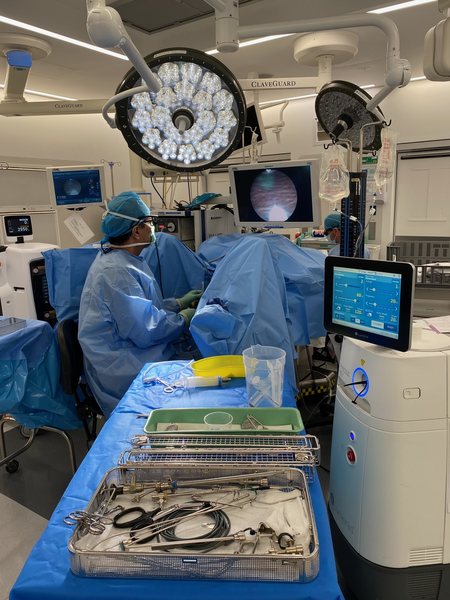
What we do is we put a telescope in through the eye of the penis.
We have a laser fibre that is inserted through the resectoscope.
The laser then works on the prostate and it cuts and seals at the same time.
It also uses saline for irrigation, the same thing we put in a drip, so if that absorbs into the system, there’s no issue as opposed to a standard TURP (Transurethral Resection of the Prostate)9.
The Holmium Laser also cuts at the plane between the adenoma - the abnormal growing, central part of the prostate - and the capsule, so we get a wide clearance when we resect this.
This tissue is then removed piecemeal through the bladder and through the urethra, so there’s no incision.
I’ve been doing the Holmium Laser now for more than 20 years*, and I’ve been extremely happy with the clinical outcomes, which is consistent with a large prospective registry-based patient cohort study in 202416.
There is less bleeding, quicker recovery, shorter catheterisation and fewer complications.16
I believe this is now the platinum standard for BPH20, and this technique will be increasingly used throughout the world and Australia.
The main stumbling block is a steep learning curve7, and the cost of the laser.
* This is the transcript of the video above. It has been lightly updated in April 2026 to reflect Dr Kooner’s current 20+ years of HoLEP experience, and its reference numbers correspond to the full reference list at the bottom of this page.
At a glance
- What it is: A minimally invasive, transurethral operation that removes the obstructing inner portion of the prostate using a holmium:YAG laser, with no external incision.2,10
- Who it suits: Men with symptomatic benign prostatic hypertrophy (BPH), from modest enlargement through very large and giant glands (over 100 g, over 200 cc).1,4,5
- Appropriate option for men on blood thinners: Cited in international guidance as an appropriate option for men at higher bleeding risk, including those on anticoagulant or antiplatelet therapy.1,11,12,18
- Durable: Randomised and long-term cohort data show symptom relief maintained out to 7 to 10 years, with approximately 95% of patients free of any repeat prostate operation at 10 years.3,6,8
- Lower bleeding rate: Meta-analyses of randomised trials consistently show less bleeding than with standard transurethral resection of the prostate (TURP).9,11
- Short hospital stay.4,9
What is HoLEP?
Holmium Laser Enucleation of the Prostate (HoLEP) is a transurethral operation for an enlarged prostate (benign prostatic hypertrophy, BPH). A holmium:YAG laser is used to separate the obstructing inner portion of the prostate (the adenoma) from its outer capsule in whole lobes. The tissue is left on a small stalk and removed (“mushroom technique”)19 or pushed into the bladder and broken down with a mechanical morcellator. It is then removed through the urethra.2,10 There is no cut on the abdomen or anywhere on the skin.
Because the operation follows the natural anatomical plane between the adenoma and the capsule, HoLEP removes proportionally more obstructing tissue than a conventional TURP, which shaves the prostate from the inside rather than enucleating it.4,9
HoLEP at Urology NSW
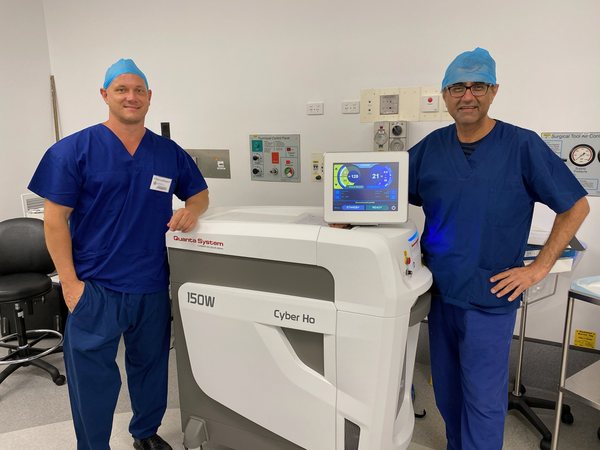
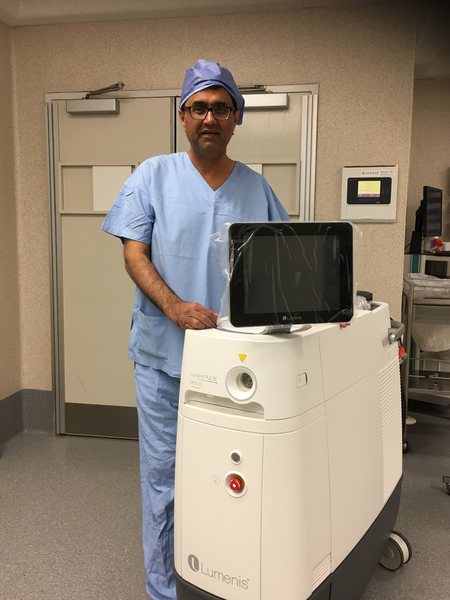
Dr Raji Kooner has pioneered HoLEP in Australia, has been performing this procedure for over 20 years, and has completed over 3,000 holmium laser procedures. He uses the latest technology available and has been fortunate to be supported by St Vincent’s Private and The Mater Hospital, which provide exceptional surgical facilities and exceptional post-operative care.
Urology NSW offers the full spectrum of modern BPH treatments. Decisions about which procedure is most appropriate are made with the patient, based on gland size, symptom severity, co-existing medical conditions, anticoagulation, and personal priorities around sexual function and recovery.
Patients who would like to explore whether HoLEP is appropriate for them are welcome to contact the practice to arrange a consultation or request a second opinion.
Who is suitable for HoLEP?
HoLEP is described in international guidance as effectively independent of prostate volume - it remains a valid option across the full range of gland sizes.1,4,5 It is especially often recommended for:
- Men with moderate to severe lower urinary tract symptoms due to BPH that have not responded adequately to medication.1
- Men with large or very large prostates, including glands over 100 g and giant glands over 200 cc, where some alternative procedures are limited by size.1,4,5 See the section on HoLEP for large and giant prostates below for the detailed evidence.
- Men taking anticoagulant or antiplatelet therapy. The laser coagulates as it cuts, and HoLEP is specifically identified in guideline-level sources as appropriate for patients at higher bleeding risk.1,11,12,18 See HoLEP for men on blood thinners below.
- Men in urinary retention or dependent on an indwelling or intermittent catheter because of prostatic obstruction.6,16
- Men with bladder stones or a bladder diverticulum caused by long-standing obstruction, as the laser can address bladder stones during the same anaesthetic.
At Urology NSW the full range of BPH treatments are available including HoLEP, TURP, Greenlight laser vaporisation, UroLift, Rezum and iTind. This allows us to specifically match a procedure to the individual patient taking into account his person, his preference and prostate characteristics.
How is HoLEP performed?
HoLEP is performed under general or spinal anaesthesia and typically takes between 60 and 150 minutes depending on prostate size.4,5 The procedure runs as follows:
- Telescope through the urethra. A resectoscope (a telescope with a working channel) is passed along the urethra into the prostate. There is no external incision.
- Laser enucleation. A holmium:YAG laser fibre, pulsed at a wavelength of approximately 2,100 nm, is used to develop the plane between the adenoma and the surgical capsule.2 This is the same anatomical plane a surgeon’s finger would follow during an open simple prostatectomy.4
- Lobes freed. The obstructing lobes of the prostate - typically a median lobe and two lateral lobes - are freed as whole pieces.10
- The prostate segment can be left with a small attachment and then removed piecemeal through the urethra with no cutting involved. Alternatively, it can be morcellated, with the morcellator being introduced through the resectoscope.
- The detached tissue is cut into small fragments that are removed. The fragments are sent to pathology for routine examination.10
- Catheter. A urinary catheter is placed at the end of the operation to drain the bladder and flush any blood-stained urine while the prostatic fossa heals. It is usually removed within a few days.4,9
Irrigation throughout the operation is with normal saline - the same isotonic fluid used in intravenous drips. Unlike the hypotonic glycine irrigation historically used with monopolar TURP, saline absorption is not clinically significant, so TUR syndrome (dilutional hyponatraemia) is not a meaningful risk with HoLEP.9
HoLEP vs TURP
Studies show that HoLEP offers superior outcomes to standard TURP (see below). Compared with standard TURP, pooled randomised data and large series report that HoLEP offers:
- Less bleeding and fewer transfusions. Transfusion rates after HoLEP are typically under 1% in large series, significantly lower than after TURP.9,11 Here at Urology NSW we have had no documented blood transfusions.
- Shorter catheterisation. HoLEP has been shown to have shorter catheterisation than TURP.4,9
- Shorter hospital stay. Mean hospital stay is roughly two to three days after HoLEP, shorter than TURP in most trials.4,9
- More obstructing tissue is removed. Because HoLEP enucleates (“shells out”) the adenoma rather than shaving it, a larger volume of obstructing tissue is removed for a given gland size.4,9
- A lower rate of repeat surgery. In a recent national registry of more than 33,000 primary surgical interventions, 97% of HoLEP patients had not required a further prostate operation at three years, compared with 93.5% after TURP.17
- No meaningful risk of TUR syndrome. Saline irrigation eliminates the dilutional hyponatraemia that has historically been a rare but serious concern with monopolar TURP.9
The usual trade-off is a slightly longer operating time for HoLEP than for a comparable TURP. This is usually of no clinical consequence to a patient.9
HoLEP for large and giant prostates
As the prostate gets bigger, the number of safe and effective surgical options narrows. Some of the minimally invasive treatments (UroLift, Rezum, iTind) have upper size limits. Conventional TURP becomes slower and carries more bleeding and more risk of TUR syndrome above roughly 80 grams. Historically this left open simple prostatectomy - an abdominal operation to open the bladder and shell the adenoma out by hand - as the only definitive answer for very large glands.
HoLEP has largely replaced that open operation. It uses a telescope through the urethra and a pulsed holmium:YAG laser to do the same thing - shell the adenoma out along its natural plane - without any skin incision.4,10
Why size matters
Prostate weight is usually estimated in grams (from trans-rectal ultrasound or MRI) or cubic centimetres (1 cc is approximately 1 g). For context:
- Normal young adult prostate: around 20 to 25 g.
- Modest BPH enlargement: 30 to 60 g.
- Large: 80 to 150 g.
- Very large: 150 to 200 g.
- Giant: over 200 g, occasionally over 500 g.
The larger the gland, the more obstructing tissue needs to be removed to restore a good urinary channel. Any operation that removes only a thin surface layer will leave most of the blockage behind.
What the evidence shows
HoLEP has been compared head-to-head with open prostatectomy in randomised trials for exactly this group of patients:
- Prostates over 70 g, 24-month follow-up. A randomised trial of HoLEP versus open simple prostatectomy showed equivalent improvements in urinary flow and symptom scores, with significantly less bleeding, shorter catheterisation, and shorter hospital stay after HoLEP.4
- Prostates over 100 g, 5-year follow-up. A second randomised trial with a median prostate size well above 100 g confirmed that HoLEP delivered durable symptom relief out to five years, equivalent to the open operation, with the same advantages on bleeding and recovery.5
- Giant prostates. Published series have reported successful HoLEP in glands above 200 cc and occasionally above 500 g, with outcomes comparable to smaller prostates once the learning curve has been passed.10
A large 2025 meta-analysis of 13 randomised trials comparing HoLEP with TURP found that HoLEP removed a larger proportion of obstructing tissue and produced a lower bleeding rate, with the advantage growing as prostate size increased.9
Practical points for men with very large prostates
- Complete enucleation, not surface shaving. HoLEP follows the anatomical plane between the adenoma and the capsule, so the obstructing tissue is removed as whole lobes - essentially the same surgical principle as the open operation, but through the urethra.4,10
- Less bleeding. The laser seals small vessels as it cuts. Transfusion rates after HoLEP in large glands remain under 1 percent in most series.4,5
- No abdominal incision. Recovery, pain, and catheter time are all markedly shorter than with open surgery.4
- TUR (low sodium) syndrome is essentially avoided. Saline irrigation is used rather than hypotonic glycine, which means the dilutional hyponatraemia that has historically limited how long a TURP could safely be performed in a very large gland is not a concern in HoLEP cases.9
- Bladder stones can be treated at the same time. Long-standing obstruction often causes bladder stones, and the holmium laser can break these up during the same anaesthetic.
- Operating time is longer. Enucleating a giant prostate can take two to three hours, depending on size and anatomy. This is still shorter than open surgery for most glands and does not change the hospital recovery meaningfully.9
Dr Kooner has been performing HoLEP for more than 20 years, and his clinical experience is consistent with the published evidence that HoLEP offers superior outcomes to TURP in large and giant prostates.
HoLEP for men on blood thinners
Many men who develop an enlarged prostate are already taking an anticoagulant or an antiplatelet medication - because of an earlier stroke, a heart stent, atrial fibrillation, a mechanical heart valve, or a deep vein thrombosis. HoLEP minimises the time required to be off these medications. Stopping these medications around surgery introduces its own risk, which most patients and their cardiologists prefer to minimise if they safely can.
HoLEP is the surgical BPH treatment most commonly recommended in this setting, including in current international guidelines,1 because the laser seals small blood vessels as it cuts.11,12,18
Why HoLEP is different on blood thinners
- The laser cuts and coagulates at the same time. The pulsed holmium:YAG beam is absorbed in a very thin layer of tissue at the fibre tip, sealing the small arteries and veins of the prostate as they are divided.2
- Saline irrigation. Saline is used throughout rather than the hypotonic glycine used in classical TURP, so there is no risk of TUR syndrome if a long operation is needed in a man with other medical problems.9
What the evidence shows
- US high-volume series. An Indiana University / Methodist Hospital series compared 116 men on anticoagulation or antiplatelet therapy with 1,558 HoLEP patients who were not on such therapy. Lowest postoperative haemoglobin and transfusion rates were the same in both groups; bladder irrigation time and hospital stay were slightly longer for the anticoagulated men, but major bleeding and reoperation rates were not significantly different.11
- Contemporary European experience. A 2024 retrospective analysis from a high-volume European centre of men undergoing HoLEP while on antithrombotic therapy confirmed a low rate of early haemorrhagic complications.12
- Guideline position. The American Urological Association specifically identifies HoLEP as an appropriate surgical option for men at higher bleeding risk, including those who cannot safely come off an anticoagulant.1
Typical peri-operative approach
The decision about whether to pause, bridge, or continue a blood thinner is made case by case in conjunction with the treating cardiologist or haematologist.
If you have been told that you cannot have a TURP because of your blood-thinning medication, it is worth asking specifically about HoLEP. In most cases it is possible to proceed with minimal or no interruption of the medication. In a small number of men - for example those with a very recent coronary stent or a new thromboembolic event - surgery is deferred until the antithrombotic regimen has been through its safest window.
Advantages of HoLEP
Pulling the evidence together, the main advantages of HoLEP are:
- Size-independent. HoLEP can be offered across the full range of prostate sizes, from modest glands to giant prostates, without the volume ceilings associated with some alternative procedures.1,4,5
- Minimally invasive. The procedure is entirely transurethral, with no skin incision.2
- Saline irrigation. Eliminates the metabolic risk of TUR syndrome associated with older hypotonic-glycine TURP.9
- Haemostatic. The laser seals small vessels as it cuts, limiting blood loss. This is independent of the patient’s own clotting status, which is why HoLEP can be performed safely in men on anticoagulant or antiplatelet therapy.11,12,18
- Tissue preserved for pathology. The morcellated fragments are sent for routine histological examination, which can incidentally detect occult prostate cancer in a small proportion of cases.10
- Durable. Randomised and long-term cohort evidence shows maintained symptom relief at 7 to 10 years, with low reoperation rates.3,6,8
Risks and complications
Every patient is counselled on the following before surgery. Published rates from contemporary series are included for context.
- Retrograde ejaculation. Most men (approximately 70 to 80%) will have reduced or absent antegrade ejaculate after HoLEP; semen passes back into the bladder instead. Orgasm sensation is generally preserved. Natural conception without assisted reproduction is not reliably possible afterwards, which should be discussed in advance by men who still wish to father children.15
- Erectile function. Long-term cohort data and a 2024 narrative review report no significant deterioration in validated erectile function scores at 12 months and beyond.15
- Bleeding and transfusion. Transfusion after HoLEP is very uncommon and is lower than after TURP in pooled randomised evidence.9,11 In men on anticoagulants, the transfusion rate is modestly higher but return to theatre for bleeding is still rare.11,12,18
- Bladder neck contracture or urethral stricture. Scar tissue narrowing of the bladder neck or urethra occurs in roughly 2 to 5% of cases over long-term follow-up and is usually managed with a small endoscopic day-procedure.7,8
- Lower urinary tract irritation. Frequency, urgency, and a mild burning sensation on passing urine are common in the first few weeks and settle as the operative site heals. Blood-tinged urine can recur briefly around 10 to 14 days after surgery, when a healing scab separates.
- Repeat prostate surgery. Uncommon after HoLEP. In a single-centre series of more than 1,000 procedures, 95% of men had not required any further prostate operation at ten years.8
Recovery after HoLEP
Most men go home soon after the operation and feel noticeably better within the first week or two. Because the operation is performed through the urethra, there is no external wound to heal, and pain is usually limited to mild catheter discomfort and some irritation on passing urine for the first few weeks.9
In hospital
- Catheter. A urinary catheter is in place when you wake up. It has a channel that continuously flushes the bladder with saline for the first several hours, to clear any small amounts of blood and clot while the operative site seals.9
- Eating and drinking. Most men can eat and drink soon after the anaesthetic wears off.
- Pain. There are no external cuts and pain is usually mild. Paracetamol is typically sufficient; an anti-inflammatory may be added. Discomfort from the catheter itself tends to be the most common complaint and settles once it is removed.
- Length of stay. One to three nights is typical.4,9 The catheter is usually removed in the morning once the urine is clear. Discharge home follows once you are passing urine satisfactorily, your temperature is normal, and any pain is controlled with simple medication.
The first two weeks
- Blood in the urine. A pink tinge, or occasional small clots, is common in the first two weeks as the inside of the prostate heals. This may come and go, and can recur briefly from week one to week four as a healing scab separates. We advise to drink extra fluid and rest when it happens; it usually settles within 24 hours. This occurs in a small percentage of patients.
- Burning and stinging on passing urine. Common for the first two to three weeks and does not usually mean an infection. Ural sachets (available over the counter) can help.
- Urgency and frequency. The bladder has been irritated by the catheter and the operative site, and these symptoms are often temporarily worse in the first few weeks before they start to improve.
- Bowels. Constipation puts strain on the prostate bed and can trigger bleeding. Keep well hydrated, eat fruit, vegetables and fibre, and use a mild laxative if needed.
- Pelvic floor exercises. If there is any urine leakage on cough or exertion, starting gentle pelvic floor exercises early tends to shorten the period of transient leakage.13,14
- Activity. Walking is encouraged from the day you go home. Avoid heavy lifting (more than three to five kilograms), cycling, digging in the garden, and straining for the first two weeks.
- Driving. Short local trips are usually fine from about one to two weeks, provided you feel well and are not taking strong painkillers. Avoid long drives for four weeks.
- Work. Many men are back to a desk job within one to two weeks. A physical job may need three to four weeks.
- Sexual activity. Avoid intercourse for two weeks, then resume at your own pace.
Weeks two to six
- Urinary flow continues to improve.
- Blood in the urine should gradually stop.
- Frequency and urgency usually settle over the first three months; most men notice a clear improvement by six weeks.9
- Strenuous exercise, heavy lifting, and cycling can usually be resumed from around four weeks.
Three to six months
- Most of the urinary improvement will be apparent by three months. Some men notice further gains in flow and emptying out to six months.
- Nocturia (waking overnight to pass urine) often takes the longest to settle, particularly if it has been a long-standing problem.
- Medications taken before the operation for BPH are usually stopped once the operation has taken effect.
Follow-up
A post-operative review is usually arranged about six weeks after surgery. The visit typically includes:
- A urinary flow rate and bladder scan to document improvement.
- Review of the pathology report from the prostate tissue that was removed.
- A symptom score (for example the International Prostate Symptom Score) to compare against pre-operative results.
- A discussion of any medications that can now be stopped.
Call the practice, urology ward, or attend the nearest emergency department out of hours, for any of the following:
- Heavy or bright-red bleeding that is getting worse rather than lighter.
- Passing large clots or being unable to pass urine at all.
- A fever above 38 degrees Celsius, shaking chills, or cloudy and offensive urine.
- Severe lower abdominal pain not controlled by simple painkillers.
- New leg swelling, calf pain, or chest pain or breathlessness (to rule out a clot).
How durable are the results?
HoLEP has one of the strongest long-term evidence bases of any surgical BPH treatment.
- In a randomised trial with follow-up approaching 8 years, none of the HoLEP patients remaining in the analysis had required reoperation for BPH.3
- In a 10-year follow-up cohort, approximately three quarters of men remained free of clinically significant symptoms at that interval.6
- In a single-centre series of more than 1,000 HoLEP procedures, Kaplan-Meier freedom from any repeat prostate surgery was 95% at ten years.8
For most men, HoLEP will be the only prostate operation they ever need.
Why HoLEP is not offered everywhere
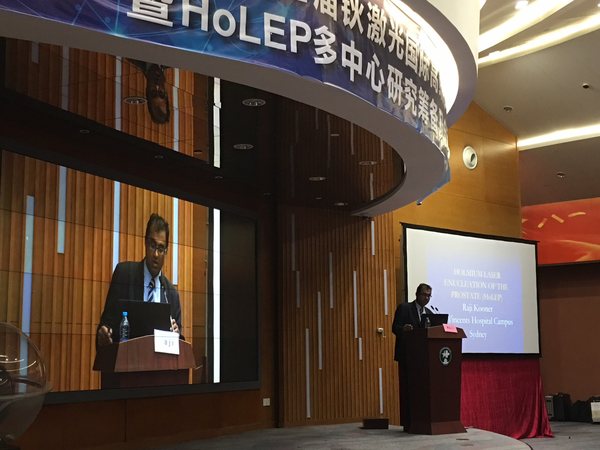
Two practical factors limit wider adoption:
- A substantial learning curve. Published learning-curve analyses suggest that technical efficiency and continence outcomes improve steadily over the first 20 to 50 cases, and that reoperation rates are lower at high-volume centres than where the procedure is performed infrequently.7,17
- Capital cost. A high-powered holmium laser platform is expensive, and not every hospital has one available.
Surgeon and hospital experience matters.
Frequently asked questions
Will HoLEP work if my prostate is very large?
Yes. HoLEP is well documented for prostates over 70 g, over 100 g, and beyond 200 cc, and is the preferred endoscopic option when the gland is too large for a standard TURP.1,4,5 The HoLEP for large and giant prostates section above sets this out in more detail.
Can I have HoLEP if I am on blood thinners?
In most cases, yes. The laser seals small vessels as it cuts, and HoLEP is cited in international guidance as an appropriate option for men at higher bleeding risk. Whether any medication is paused around the operation is decided case by case with the treating cardiologist or haematologist.1,11,12,18 See HoLEP for men on blood thinners above.
Will HoLEP affect my sex life?
Erectile function is not generally affected; long-term data show no meaningful change in validated erectile function scores at 12 months and beyond.15 However, most men (around 70 to 80%) will have reduced or absent ejaculate afterwards, because opening the bladder neck allows semen to pass into the bladder rather than out through the urethra.15
How long before I can drive and return to work?
Most men feel well enough to resume light daily activity and to drive within one to two weeks, and return to office-type work in a similar timeframe. Heavy lifting, cycling, and strenuous exercise are typically deferred for approximately four weeks while the prostatic fossa heals. The Recovery after HoLEP section gives the full week-by-week guide.
Will I need another prostate operation later?
It is very unlikely. In a single-centre series of more than 1,000 HoLEP procedures, 95% of men had not required any further prostate operation at ten years.8 In a national registry of more than 33,000 patients, 97% of HoLEP patients had not needed a repeat procedure at three years.17
Is the prostate tissue examined for cancer?
Yes. Because HoLEP removes tissue (rather than vaporising it), the fragments are routinely sent to pathology. This occasionally identifies incidental prostate cancer that was not apparent on pre-operative investigations.10
Holmium Laser Information Brochures
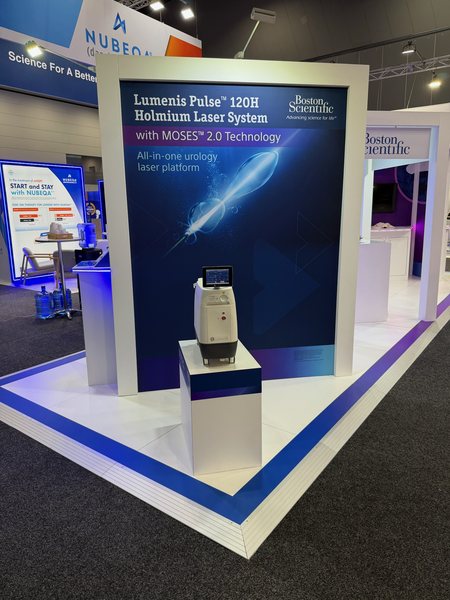
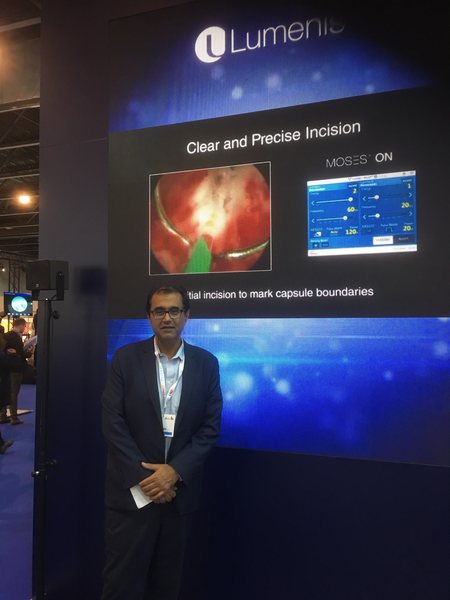
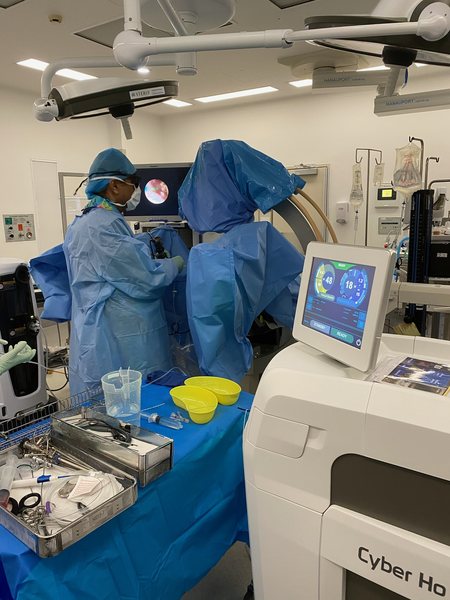
Holmium laser and HoLEP images
References
- Sandhu JS, Bixler BR, Dahm P, Goueli R, Kirkby E, Stoffel JT, Wilt TJ. Management of Lower Urinary Tract Symptoms Attributed to Benign Prostatic Hyperplasia (BPH): AUA Guideline Amendment 2023. Journal of Urology. 2023. doi:10.1097/JU.0000000000003698.
- Wollin TA, Denstedt JD. The Holmium Laser in Urology. Journal of Clinical Laser Medicine & Surgery. 1998;16(1):13-20. doi:10.1089/clm.1998.16.13.
- Gilling PJ, Wilson LC, King CJ, Westenberg AM, Frampton CM, Fraundorfer MR. Long-term results of a randomized trial comparing holmium laser enucleation of the prostate and transurethral resection of the prostate: results at 7 years. BJU International. 2012;109(3):408-411. doi:10.1111/j.1464-410X.2011.10359.x. PMID: 21883820.
- Naspro R, Suardi N, Salonia A, Scattoni V, Guazzoni G, Colombo R, Cestari A, Briganti A, Mazzoccoli B, Rigatti P, Montorsi F. Holmium laser enucleation of the prostate versus open prostatectomy for prostates >70 g: 24-month follow-up. European Urology. 2006;50(3):563-568. doi:10.1016/j.eururo.2006.04.003. PMID: 16713070.
- Kuntz RM, Lehrich K, Ahyai SA. Holmium laser enucleation of the prostate versus open prostatectomy for prostates greater than 100 grams: 5-year follow-up results of a randomised clinical trial. European Urology. 2008;53(1):160-168. doi:10.1016/j.eururo.2007.08.036.
- Fallara G, Capogrosso P, Schifano N, Costa A, Candela L, Cazzaniga W, Boeri L, Belladelli F, Scattoni V, Salonia A, Montorsi F. Ten-year follow-up results after holmium laser enucleation of the prostate. European Urology Focus. 2021;7(3):612-617. doi:10.1016/j.euf.2020.05.012. PMID: 32576532.
- Elzayat EA, Elhilali MM. Holmium laser enucleation of the prostate (HoLEP): long-term results, reoperation rate, and possible impact of the learning curve. European Urology. 2007;52(5):1465-1471. doi:10.1016/j.eururo.2007.04.074. PMID: 17498867.
- Elkoushy MA, Elshal AM, Elhilali MM. Reoperation after holmium laser enucleation of the prostate for management of benign prostatic hyperplasia: assessment of risk factors with time to event analysis. Journal of Endourology. 2015;29(7):797-804. doi:10.1089/end.2015.0060. PMID: 25705817.
- Daryanto B, Suryanullah WS, Putra PYP. Holmium laser enucleation of the prostate versus transurethral resection of the prostate in treatment of benign prostatic hyperplasia: a meta-analysis of 13 randomized control trials. Current Urology. 2025;19(1):6-16. doi:10.1097/CU9.0000000000000257.
- Michalak J, Tzou D, Funk J. HoLEP: the gold standard for the surgical management of BPH in the 21st century. American Journal of Clinical and Experimental Urology. 2015;3(1):36-42.
- El Tayeb MM, Jacob JM, Bhojani N, Bammerlin E, Lingeman JE. Holmium laser enucleation of the prostate in patients requiring anticoagulation. Journal of Endourology. 2016;30(7):805-809. doi:10.1089/end.2016.0070.
- Pastore S, Carilli M, Di Nicola S, Campagna A, Parente U, Pierella F, D’Ippolito G, Agro EF, Zuccala A. Early hemorrhagic complications after holmium laser enucleation of the prostate in patients undergoing antithrombotic therapy: a retrospective analysis from a high-volume centre. Journal of Clinical Medicine. 2024;13(19):6006. doi:10.3390/jcm13196006. PMCID: PMC11478196.
- Coman RA, Bschleipfer T, Al Hajjar N, Petrut B. Predictive factors of transient urinary incontinence following holmium laser enucleation of the prostate (HoLEP): single-center experience. Medicina (Kaunas). 2024;60(9):1460. doi:10.3390/medicina60091460.
- Ye H, Codas R, Daily T, Badet L, Colombel M, Fassi-Fehri H. Stress urinary incontinence after holmium laser enucleation of prostate: incidence and risk factors. Journal of Men’s Health. 2022;18(1):17. doi:10.31083/jomh.2021.129.
- Ibis MA, Castiglione F, Khan N, Cakir OO, Tokatli Z, Yaman O. Erectile and ejaculatory outcomes after holmium laser enucleation of the prostate: a comprehensive narrative review. UroPrecision. 2025. doi:10.1002/uro2.70030.
- Lee H, So S, Cho MC, Cho SY, Paick JS, Oh SJ. Clinical outcomes of holmium laser enucleation of the prostate: a large prospective registry-based patient cohort study under regular follow-up protocol. Investigative and Clinical Urology. 2024;65(4):361-367. doi:10.4111/icu.20240080.
- Gilfrich C, May M, Gratzke C, Fahlenbrach C, Gunster C, Jeschke E, Popken G, Roigas J, Stolzenburg JU, Leicht H. Reoperation for benign prostatic obstruction following transurethral resection and holmium laser enucleation of the prostate: a 3-year follow-up study of over 33,000 primary surgical interventions. European Urology Focus. 2025;11(4):609-617. doi:10.1016/j.euf.2025.02.017.
- Bishop CV, Liddell H, Ischia J, Paul E, Appu S, Frydenberg M, Pham T. Holmium Laser Enucleation of the Prostate: Comparison of Immediate Postoperative Outcomes in Patients with and without Antithrombotic Therapy. Current Urology. 2013;7(1):28-33. doi:10.1159/000343549. PMID: 24917753.
- Hochreiter WW, Thalmann GN, Burkhard FC, Studer UE. Holmium laser enucleation of the prostate combined with electrocautery resection: the mushroom technique. Journal of Urology. 2002;168(4 Pt 1):1470-1474. doi:10.1097/01.ju.0000026904.51834.e2. PMID: 12352418.
- Bass EJ, Challacombe BJ. HoLEP: a platinum standard for modern benign prostatic hyperplasia treatment. Trends in Urology & Men’s Health. 2024. doi:10.1002/tre.969.