
Urodynamics
What is a urodynamic assessment?
A urodynamic assessment is a test of how the bladder works. It is especially aimed at detecting any abnormality in the way the bladder and urethra (the water tube) store and release urine.
Both men and women present to their specialist with symptoms such as incontinence (leakage), frequency or urgency. Often, when the bladder and urethra are inspected directly - for example with a cystoscopy - no abnormality can be seen. In these cases the problem lies in the functioning of the bladder and urethra, and that kind of abnormality can only be detected by a urodynamic assessment.
What does the test measure?
The form of urodynamic testing used at Urology NSW is three-channel cystometry. It shows how the bladder is working as it fills and empties, and involves measuring three things:
- The pressure inside the bladder - measured with a fine catheter carrying a special pressure sensor on its end.
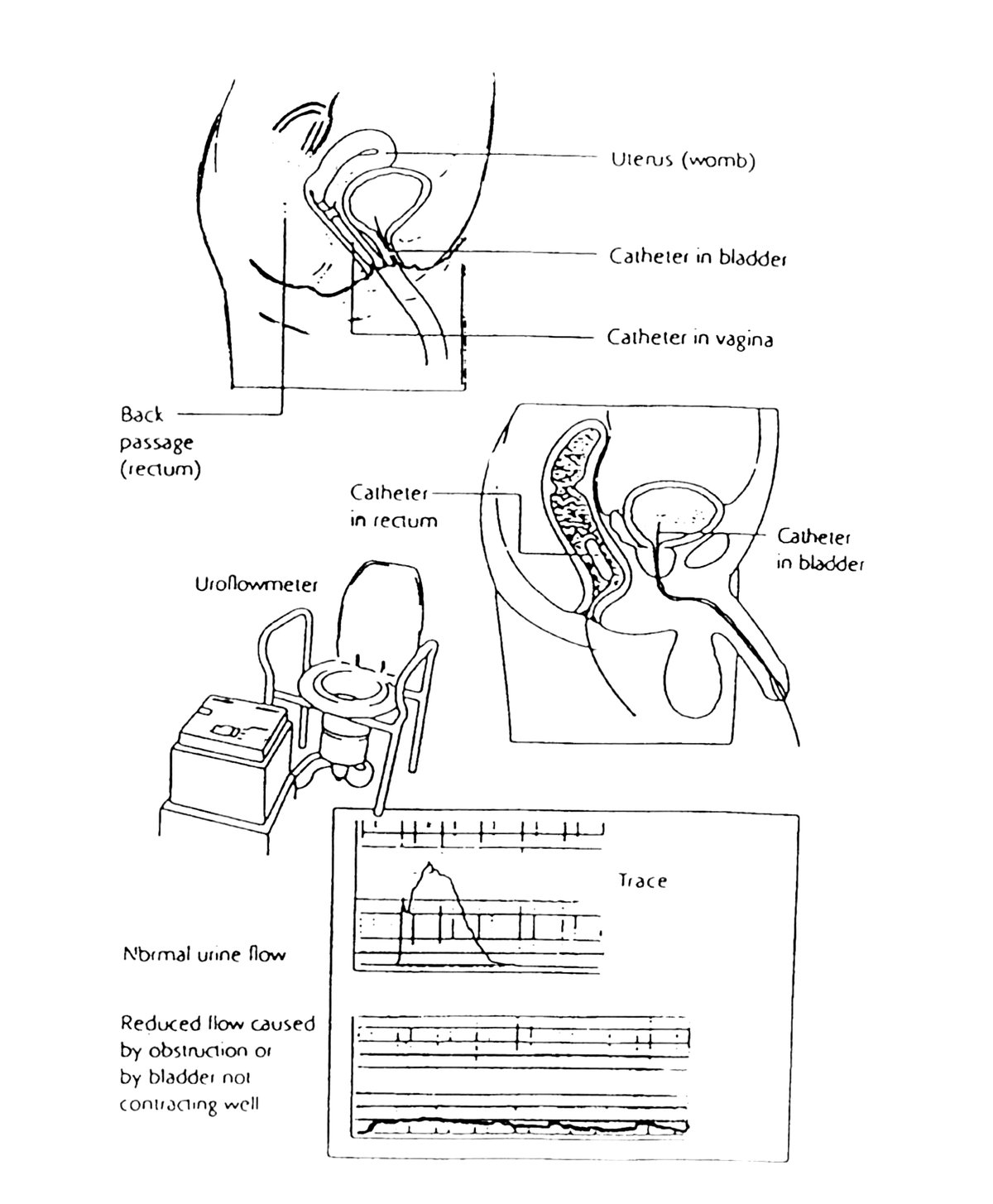
- The pressure in the abdomen - usually measured with a fine catheter placed in the back passage (rectum), though in women a vaginal catheter may be used instead.
- The rate at which urine is emptied - measured by passing urine through a funnel into a special device called a uroflowmeter.
Comparing these three measurements lets the specialist work out whether a symptom is coming from the bladder muscle itself, from a blockage to the bladder outlet, or from elsewhere. The test takes about half an hour.
What happens during the test?
The assessment works by mimicking the normal situation of going to the toilet:
- A free flow test first. Before any catheter is passed, you will be asked to pass urine quietly by yourself into the uroflowmeter. This gives the first piece of information about any possible blockage - which is why it is important to arrive with a full bladder.
- Fine catheters are placed. A tiny tube is passed through the urethra into the bladder. A second fine catheter is placed in the rectum (or, in some women, the vagina) to measure abdominal pressure.
- The bladder is filled. The bladder can fill naturally from drinking fluid, but it is usually necessary to know precisely how much fluid is in the bladder at any time, so the bladder is filled with a dilute salt (saline) solution through the catheter. While the bladder is filling, the pressures inside it are measured to detect whether it fills normally or whether the bladder muscle has become irritable.
- You describe what you feel. As the bladder fills, you will be asked to tell the doctor when you feel the first desire to pass urine, and then a strong desire. After this point the bladder continues to be filled until you feel that you really cannot take any more. Do not be embarrassed if you leak urine during this test - the doctor expects this to happen.
- Provocation manoeuvres. Once the bladder is full, you may be asked to carry out some activities, such as changing position or coughing, that could cause leakage of urine.
- You empty the bladder. You will then be asked to pass urine into the uroflowmeter with the fine catheter still in place. This shows whether the bladder is able to empty properly or whether there is any blockage to its emptying.
- Imaging where needed. Finally, x-rays or ultrasound may be used to work out whether there are weaknesses in the urethra or blockages, and where those blockages are. Imaging also shows the shape of the bladder.
What can the test show?
Taken together, the measurements and imaging can tell the specialist:
- Whether the bladder fills normally or whether the bladder muscle has become irritable (overactive).
- Whether the bladder empties properly, and whether there is any blockage to its emptying - and, with imaging, where that blockage is.
- Whether there are weaknesses in the urethra that allow leakage.
- The shape of the bladder.
- Whether the nerves supplying the bladder are working normally or have been damaged.
- A reduced urine flow on the trace can be caused either by obstruction or by the bladder not contracting well - the pressure measurements are what tell these two apart.
Urodynamic studies do not always provide an explanation for urinary symptoms, but they are only requested when the result is expected to help decide how the symptoms should be managed.1
Does it hurt?
The test does not take very long - about half an hour - and although it can be a little uncomfortable, most patients do not find it painful. The catheters used are very fine, and the clinical team will explain each step as it happens and respect your dignity throughout.1
How do I prepare?
- Attend the appointment with a full bladder. This is important - the first part of the test is a natural flow measurement, which needs a comfortably full bladder.
- Check your medications when booking. If you take tablets for your bladder symptoms (for example oxybutynin, solifenacin, tolterodine or mirabegron), ask the rooms whether these should be stopped before the test, as they can mask the very behaviour the test is designed to measure.1 Do not stop any medication without checking first.
- Tell the team about allergies - especially to latex or iodine - and let the staff know if you are or may be pregnant.1
- If you may have a urine infection, let the rooms know. Testing is usually postponed and the infection treated first.1
After the test
You can go home as soon as the test is finished and can return to normal activities the same day. At the completion of the test a report is prepared and forwarded to your referring doctor, and the results are discussed with you along with any recommended treatment.
Mild after-effects are common for a short period: published figures from the British Association of Urological Surgeons (BAUS) report burning or discomfort on passing urine and a small amount of blood in the urine in between 1 in 2 and 1 in 10 patients, and a urine infection requiring antibiotics in between 1 in 10 and 1 in 50 patients.1 Drinking plenty of fluid for the first 24 to 48 hours helps reduce the risk of infection.1 Contact the rooms or your GP if you develop a fever, ongoing burning, or difficulty passing urine after the test.
Where is the test conducted?
Urodynamic assessments are conducted in Dr Kooner's rooms: Suite 905, St Vincent's Clinic, 438 Victoria Street, Darlinghurst. The rooms can be contacted on 02 8382 6980 with any questions before your appointment.
Frequently asked questions
Why do I need this test if my cystoscopy was normal?
A cystoscopy looks at the lining of the bladder and urethra. Symptoms such as urgency, frequency and leakage often come from how the bladder and urethra function rather than how they look, and a functional abnormality can only be detected by a urodynamic assessment.
How long does it take?
The test itself takes about half an hour. Allow a little extra time for preparation and for emptying your bladder at the start.
What if I leak during the test?
Do not be embarrassed - reproducing your symptoms is part of the purpose of the test, and the doctor expects this to happen. Demonstrating the leakage under measurement is exactly what allows its cause to be identified.
Do I really need to arrive with a full bladder?
Yes. The first part of the assessment is a natural flow measurement taken before any catheter is passed, and it needs a comfortably full bladder. If you arrive empty, this part of the test cannot be done.
What happens to the results?
A report is prepared at the completion of the test and forwarded to your referring doctor. The findings are used to plan treatment - for example, distinguishing an irritable (overactive) bladder, which is managed along the overactive bladder pathway, from a blockage to bladder emptying, which is managed quite differently.
Patient information brochures
The brochures below are reproduced under the BAUS patient information licence and remain copyright of the British Association of Urological Surgeons.
References
- British Association of Urological Surgeons. Urodynamics (pressure tests on the bladder) - patient information leaflet F25/039, January 2025. https://www.baus.org.uk/patients/information_leaflets/14/urodynamics_pressure_tests_on_the_bladder